From intuition to data: how AI is transforming veterinary clinics
Published on Apr 06, 2026. Learn how modern analytical tools are helping veterinarians make more informed clinical decisions for better animal care.
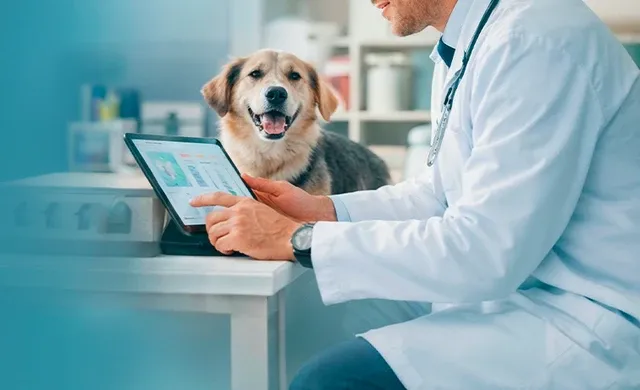
Veterinarian | Veterinary medicine management and strategy
Veterinary medicine is undergoing an important transition.
While previously many clinical decisions were based on experience and observation, today we have a new ally: data.
More than technology, we are talking about a change in mindset.
Artificial intelligence and data analysis do not replace clinical judgment — they enhance decision-making capacity, bringing more predictability, consistency, and efficiency to daily routines.
The role of data in veterinary clinical practice
In the clinic's routine, data is already present — even if not always structured:
- patient history
- case progression
- response to protocols
- patient behavior
When organized, this data reveals important patterns.
This allows veterinarians to:
- identify clinical trends
- adjust conduct with greater confidence
- anticipate patient needs
With this, the clinic moves from acting only reactively to being more strategic.
How artificial intelligence can support veterinary clinics
Artificial intelligence emerges as a decision-making support tool.
Among its applications, we can highlight:
- organization of large volumes of information
- identification of clinical patterns
- support for data analysis
- optimization of operational processes
It is important to emphasize:
Artificial intelligence does not replace the veterinarian; it enhances clinical decision-making capacity.
In practice, it's about integrating technology with professional knowledge.
Impact on clinic management and results
Clinics that use data in a structured way tend to show:
- greater case predictability
- better owner adherence to treatments
- more consistent protocols
- greater operational efficiency
These factors directly impact:
- The quality of care
- The owner's experience
- Clinical outcomes
Data-driven management allows for safer and more sustainable decisions in the long term.
Technology and continuous care in the patient journey
In veterinary medicine, care does not happen in isolated moments.
It is built throughout a journey:
Diagnosis → Treatment → Recovery → Control → Well-being
The use of data and technology helps to make this journey more integrated, allowing for greater consistency at each stage.
Integrating technology, data, and clinical routine is not about replacing care —
it's about making it more complete.
The evolution of veterinary medicine is based on a simple principle:
decide better to care better.
And this happens when we can connect knowledge, practice, and tools that support care at all stages of the patient's journey.
Solutions that integrate into the clinical routine, facilitate management, and contribute to the continuity of care are part of this evolution — where technology and practice go hand in hand for the patient's well-being.
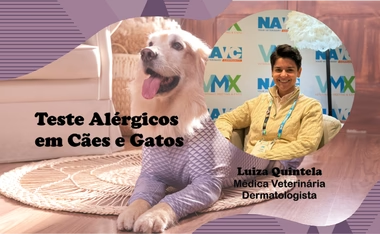
Testes Alérgicos em cães e gatos:
unindo diagnóstico e bem-estar.
Descubra como roupas protetoras auxiliam no tratamento e bem-estar animal.
Read more